.png?width=2196&height=2196&name=OS%20(1).png)



.svg)

-3.png?width=224&height=213&name=Accelerate%20(2)-3.png)










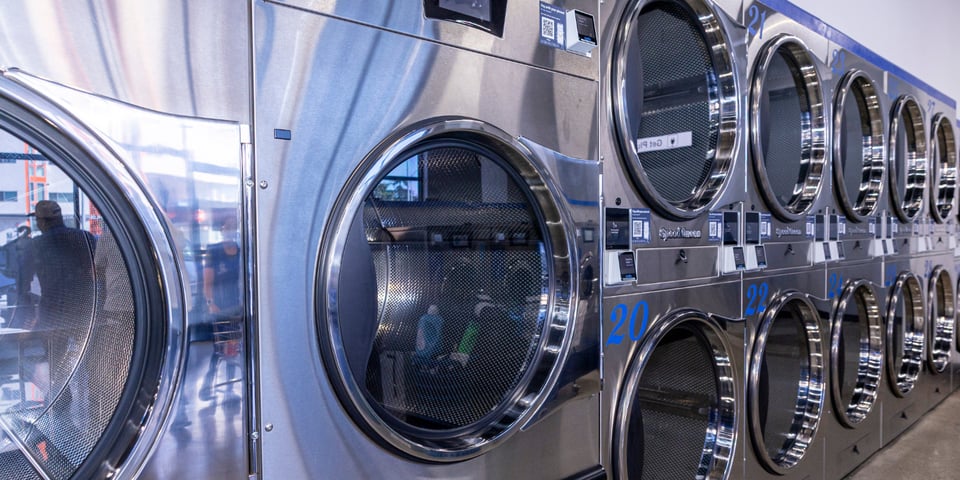
Laundromats have been an unsung cornerstone in American culture since the 1930’s. More than just a stop for convenience, laundromats provide a basic and universal need for clean clothes. From busy professionals to families and students, they cater to a wide spectrum of people and socio-economic status. This neighborhood hub is a timeless option for those considering investing in laundromats.
The global online on-demand laundry service market is expected to reach an estimated $94 billion by 2031 with a CAGR of 22.6% from 2025 to 2031. Laundromats have been quite literally woven into American culture for nearly 100 years, and considered a “recession-proof” industry. Now, it’s reinventing itself, ripe with new investment opportunities.
Is a laundromat worth the investment?

Yes—laundromats can be a strong small-business investment when the location, equipment, and service mix are optimized. Many laundromats generate 20–30% annual returns, driven by consistent demand for laundry services and recurring revenue from self-service, wash and fold, and pickup and delivery.
However, profitability depends heavily on factors like:
-
Location and population density
-
Utility costs (water, gas, electricity)
-
Machine efficiency and maintenance
-
Additional services such as wash and fold or commercial laundry
-
Operational efficiency and automation
Like any business venture, breaking into the laundromat industry has its share of pros and cons, opportunities and challenges. Investors who combine modern payment systems, digital ordering, and value-added services often see higher margins and faster ROI.

Before you buy a laundromat, it’s important to conduct proper due diligence. This checklist will guide you through it to save you money.

Why investing in laundromats is a smart choice
Unless you’re an experienced investor, it can be a daunting task to determine what’s worthwhile. Among the many available ventures, investing in laundromats is a unique and promising prospect. If you're intrigued by a business that marries the daily needs of a community with consistent revenue, then opening a laundromat might be the ticket.
1. Financial stability and growth potential
Laundromats are like that reliable old friend who's always got your back. They’ve been steadily generating income for decades and you can count on clothes always getting dirty. This means a consistent customer base with a recurring need.
Amidst economic instability, recession-proof investments are top of mind. Laundry neatly fits into this category and history stands as proof. The American laundry service industry was wrought in the Great Depression. Fast forward to recent history: COVID-19 left adjacent consumer services to wither while the national laundry industry boasted room to grow. According to the U.S. Bureau of Labor Statistics (BLS), the number of coin-operated establishments went from 9,983 in the last quarter of 2025, to 10,067 in the second quarter of 2025.
2. Attractive demand trends in laundry
The laundry industry continues to grow alongside urbanization and convenience-driven consumer habits. According to industry research from IBISWorld, the U.S. laundromat industry generates billions in annual revenue, with steady demand driven by renters, students, and urban households without in-unit laundry.
Technology and service expansion are also reshaping the market. Pickup and delivery laundry services, subscription wash programs, and commercial laundry partnerships are expanding the total addressable market for laundromat operators.
For investors, this means laundromats are no longer limited to coin-operated self-service—they’re evolving into full-service laundry businesses with multiple revenue streams.
3. More payment gateways
When you picture a laundromat, you probably imagine the sound of coins clinking, but that’s not the whole story today. Card systems, digital payments, and even app-based models are turning laundromats into tech-forward storefronts.
Pittsburgh-based Steve Burk picked up on this when planning to invest in his own laundromat, The Laundry Bin. After some in-depth market research, Burk realized that the local laundromats were stuck in the past, with many still offering only a coin payment option. Burk resolved to open a laundromat offering a card-payment system, in turn providing a more convenient option for patrons.
4. Opportunities for innovation
The laundry industry is a wonderland of opportunity… But are laundromats a good investment? There are seemingly countless convenient services you can add to your business to attract new customers, bring in more revenue, and increase your margins. If you consider yourself creative, the laundry industry could be your canvas.
For example, commercial customers are a huge niche of opportunity that provides laundromat owners with a consistent cadence of high revenue. Take Amy Martinez-Monfort’s Tampa Laundry Company for example. In order to start taking on commercial clients she proactively reached out to gyms, restaurants, health centers, and neighboring small businesses. By addressing the clients’ pain points—like the tedium of in-house laundry operations—she was able to extend the value they needed from laundry services.
Another area of innovation is hybrid models like Gainesville, Florida’s Fresh Laundry & Café. Maritza Padgett, the entrepreneurial spirit behind this laundromat café, merged a community necessity with her longtime dream of owning a café. Faced with the challenge of running not one, but two successful businesses, Padgett researched technology solutions that could automate some of the mundane, time-sucking tasks that go into running her business. She implemented Cents’ solutions into her operations and never looked back. “Cents has integrated an inventory system, allowing me to separate my cafe items from my wash-and-fold ones,” she said. “Now, I can track my finances day-to-day for the café separately from my wash-and-fold customers.” The result has been countless stellar Google reviews, an increased average order value (AOV), and a majority of repeat customers. She has even been able to expand her service offerings to include pickup and delivery.


Major Laundromat Industry Trends (2026)
Several trends are shaping the future profitability of laundromats:
1. Cashless and app-based payments
Many modern laundromats now accept card, mobile wallet, and app payments instead of relying solely on coins. These systems improve customer convenience while giving owners access to valuable business data.
2. Pickup and delivery laundry services
Laundry delivery is one of the fastest-growing service models in the industry. Operators can dramatically increase revenue by serving residential customers who prefer convenience.
3. Wash and fold growth
Drop-off laundry service (often called wash and fold) can produce significantly higher margins than self-service machines because customers pay for both labor and convenience.
4. Commercial laundry partnerships
Gyms, Airbnb hosts, salons, restaurants, and medical offices often outsource laundry. These contracts create predictable recurring revenue for laundromat operators.
5. Energy-efficient machines
New high-efficiency washers and dryers reduce water and energy consumption, lowering operating costs while helping operators comply with evolving environmental regulations.
What is a laundromat ROI?

Navigating the maze of investment opportunities can sometimes feel like deciphering a foreign language. Luckily, the story becomes clearer once you break down the numbers.
Typical laundromat financial benchmarks
While every laundromat is different, investors often see the following ranges:
|
Metric |
Typical Range |
|
Initial investment |
$65,000-$1M+ |
|
Annual ROI |
20-30% |
|
Profit margins |
15-35% |
|
Average machine lifespan |
10-15 years |
|
Peak business hours |
Evenings and weekends |
These numbers vary depending on location, utilities, equipment age, and service offerings.
ROI expectations and profit margins
The average laundromat can expect an ROI of around 20-30%, depending on factors like location, competition, and the services offered. Offering ancillary services like dry cleaning, wash and fold, pickup and delivery, sneaker cleaning, and other luxury services can boost these numbers.
Investments fit for different budgets
Laundromats are versatile. If you're on a tighter budget, consider a smaller set-up in a modest location or even purchasing a pre-existing laundromat that might just need a little TLC. For those with deeper pockets, thinking about a more upscale, amenity-rich laundromat in a prime location might be appealing. There are many unique laundromat ideas to consider when crafting your business plan. Maybe even add a café, micro-library, arcade, or mini stage for local performers to attract new self-service customers.
Financial tools and resources for laundromat investors
Starting a business requires solid financial planning. Fortunately, there are specific tools tailored for the laundromat sector. Industry associations like Coin Laundry Association offer guidance, and there are specialized software that can help you project earnings, track expenses, and optimize pricing. Also, don’t overlook the power of a knowledgeable accountant, especially one familiar with the laundry business.

Potential risks and challenges
Like any brick-and-mortar business, laundromats come with operational risks. Investors should evaluate these factors carefully during due diligence:
-
Utility costs (water, gas, electricity)
-
Equipment age and maintenance history
-
Lease terms and renewal options
-
Local competition and population density
-
Opportunities to add higher-margin services
Thorough research—including reviewing financial statements, machine usage data, and local demographics—can significantly reduce investment risk.
Finding a good deal
Finding the perfect laundromat opportunity can be like searching for a needle in a haystack. While there are plenty of listings out there, not all are golden tickets. Some might be priced too high for their value, while others might come with hidden issues like outdated equipment or pending lease terminations. The key is rigorous research, placing an emphasis on factors like location, market fit, equipment quality, and lease terms. By thoroughly evaluating these elements, you're more likely to land a deal that truly meets your investment goals.
Industry considerations
While the demand for laundry is perennial, there are industry-specific threats to be wary of. The rise of in-home laundry appliances in certain markets, for example, can dampen the foot traffic to your establishment. You also need to consider local competition. With low entry barriers, it's not uncommon to see multiple laundromats pop up in close proximity. Plus, let’s not forget the looming environmental regulations that might necessitate the adoption of eco-friendly equipment or practices, sometimes at a significant cost.
Maintenance considerations
Machines require regular maintenance to function optimally. This not only includes routine check-ups but also addressing unexpected breakdowns. On top of that, keeping the laundromat clean and ensuring all amenities -such as change machines or waiting areas- are in top shape can be demanding. A malfunctioning machine isn’t just a temporary loss of income; it can also dent your establishment’s reputation.
Working schedule and operator demands
Laundromats often have extended hours, catering to folks who want to do their laundry after work or during weekends. This means being available, either in person or ensuring staff presence, for longer periods. It also means addressing operational hiccups that might arise outside the conventional working hours. Moreover, peak seasons like college move-ins in a university town can demand extra attention.
Common questions laundromat investors ask
One of the best ways to become a good laundromat investor is to befriend others in your area, or online. To help get familiar with questions you may ask, we’ve compiled a list of answers from seasoned laundromat operators.

Are laundromats profitable?
Yes. Many laundromats generate 15–35% profit margins depending on their location, operational efficiency, and service offerings. Adding services like wash and fold or pickup and delivery can significantly increase revenue.
Are laundromats a good side hustle?
Absolutely! With the potential for passive income, many investors consider laundromats an excellent side hustle, provided they've set up efficient operational processes.
What are the risks of a laundromat business?
Initial costs can vary, particularly with equipment and location choices. Operational expenses encompass utilities, maintenance, and possibly staffing. Efficiency in operations can manage these costs.
What is the future of laundromats?
The industry is ripe for innovation, with opportunities in tech integration, eco-friendly operations, and diversified service offerings.
Is owning a laundromat passive income?
It can be, especially if you have a reliable team and automated systems in place. However, some hands-on management is often required, especially in the initial stages.
Do laundromats do well in a recession?
Historically, laundromats have been resilient during economic downturns, as washing clothes remains a necessity.
How much money can a laundromat make?
Small laundromats may generate $5,000–$15,000 per month, while larger, full-service operations can generate significantly more depending on customer volume and services offered.
Why choose laundromats over other investment opportunities?
Laundromats offer a blend of steady returns, potential for passive income, and resilience against economic downturns, making them stand out against other investment options.
What are the common risks associated with laundromat investments?
Main risks include equipment breakdowns, increased competition, fluctuating utility costs, and staying updated with industry trends.
How do successful investors overcome challenges in the laundromat business?
Through diligent research, proactive maintenance, diversifying services, and staying engaged with the customer base to anticipate and meet their needs.
Can laundromats provide a steady passive income?
Yes, with the right systems and processes in place, laundromats can provide a consistent stream of passive income. However, periodic involvement to oversee operations and address challenges is advisable.
How long does it take to break even on a laundromat?
Most laundromat investors aim to reach break-even within 3–7 years, depending on the initial investment and operating costs.
Final Thoughts: Are Laundromats a Good Investment

For entrepreneurs seeking a stable, service-based business with consistent demand, laundromats remain one of the most attractive small-business investments.
The key to success isn’t just owning machines—it’s building a modern laundry business. Operators who combine efficient equipment, digital payments, and expanded services like wash and fold or pickup and delivery are positioning themselves for long-term growth.
If you’re considering investing in a laundromat, the best first step is thorough due diligence and a clear business strategy.
Before you buy a laundromat, it’s important to conduct proper due diligence. This checklist will guide you through it to save you money.
![A Buyer's Guide to Laundromat Due Diligence [Checklist]](https://www.trycents.com/hs-fs/hubfs/The%20Cents%20Guide%20to%20Laundromat%20Due%20Diligence%202.jpg?width=400&height=200&name=The%20Cents%20Guide%20to%20Laundromat%20Due%20Diligence%202.jpg)